

L'essentiel
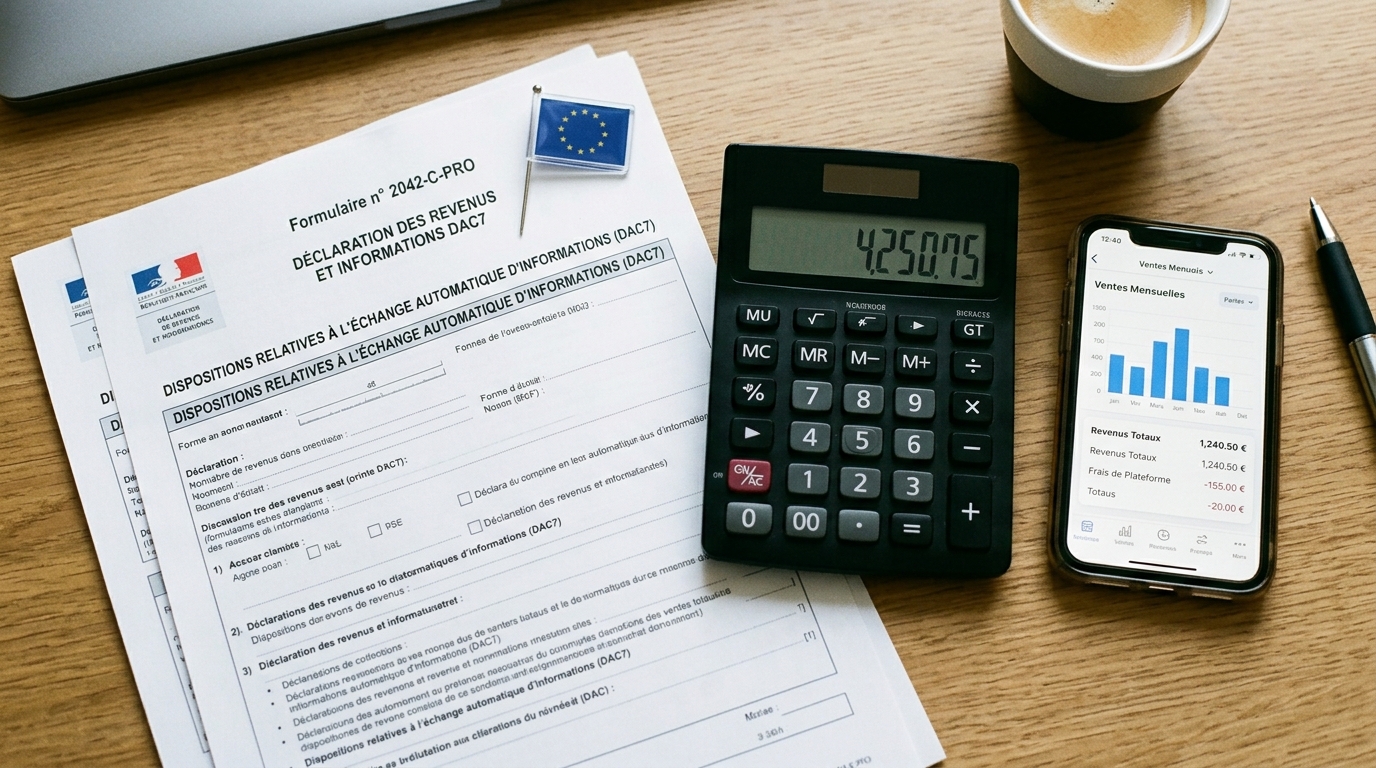
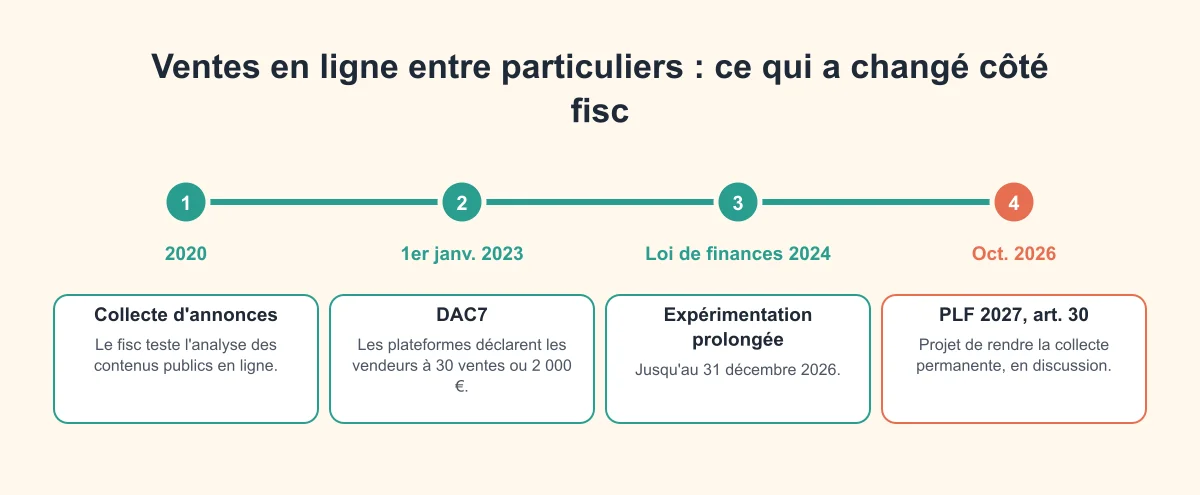
Non, aucune loi ne taxe la vente occasionnelle de vos propres affaires sur Vinted ou Leboncoin. Ce qui existe, ce sont des outils de contrôle : depuis 2023, les plateformes transmettent au fisc les données des vendeurs qui atteignent 30 ventes ou 2 000 € dans l’année (DAC7), et l’administration peut analyser les annonces publiques en ligne pour repérer des activités non déclarées. En octobre 2026, le projet de loi de finances pour 2027 propose de rendre cette collecte d’annonces permanente.
Concrètement : si vous videz votre dressing, rien ne change. Si vous achetez pour revendre sans être déclaré, le risque d’être repéré augmente. Voici ce qui est en vigueur, ce qui est discuté, et ce que ça change pour vous.
Ce qui est en vigueur aujourd’hui
| Règle | Ce qu’elle fait | Ce qu’elle ne fait pas |
|---|---|---|
| DAC7 (depuis le 1er janvier 2023) | Vinted, Leboncoin et les autres plateformes déclarent chaque année les vendeurs à 30 ventes ou 2 000 € | Elle ne crée aucun impôt |
| Vente de biens personnels | Exonérée d’impôt pour vos objets d’usage courant | Exception : objet vendu plus de 5 000 € (bijou, art, collection), régime des plus-values ou taxe sur les objets précieux |
| Achat-revente | Activité commerciale, à déclarer dès le premier euro | Pas de « franchise » tant qu’on reste sous un seuil |
| Collecte d’annonces par le fisc (expérimentation) | Analyse automatisée des contenus publics des plateformes pour détecter activités occultes ou revenus non déclarés | Elle ne vise pas les ventes de particuliers en règle |
Pour savoir de quel côté vous êtes, lisez Vinted Pro ou particulier : à partir de quand déclarer ? et nos obligations fiscales Vinted. Le simulateur d’impôts Vinted donne une estimation rapide.
Le fisc analyse les annonces : de quoi parle-t-on ?
Depuis 2020, une loi de finances autorise l’administration fiscale, à titre expérimental, à collecter automatiquement les contenus publics des plateformes en ligne (annonces, profils) et à les croiser avec ses propres données. L’expérimentation a été prolongée par la loi de finances pour 2024 jusqu’au 31 décembre 2026.
Le projet de loi de finances pour 2027 (article 30), présenté à l’automne 2026, propose de la pérenniser sans date de fin, dans un nouvel article du livre des procédures fiscales. D’après le texte rapporté par la presse :
- la collecte est limitée à trois cibles : activité occulte (non déclarée), revenus minorés ou dissimulés, et fausse domiciliation fiscale à l’étranger ;
- elle concerne toute « plateforme en ligne » au sens du règlement européen sur les services numériques, donc aussi bien les sites d’annonces que les réseaux sociaux ;
- les données inutiles doivent être détruites rapidement (en quelques jours pour les données sensibles ou sans rapport).
Statut à la mi-octobre 2026 : le texte est en discussion au Parlement, des amendements ont été déposés, et rien n’est voté. Vérifiez la version finale de la loi de finances avant de vous fier à un titre de presse.
Ce qui reste un débat, pas une loi
- Une contribution sur les livres d’occasion : en 2024, l’exécutif a souhaité faire contribuer les ventes de livres d’occasion en ligne au profit des auteurs et éditeurs. Des amendements déposés pour le budget 2025 n’ont pas été adoptés, et le sujet revient sous la forme d’un « droit de suite » étudié par le ministère de la Culture. Rien n’est en vigueur pour les particuliers à ce jour.
- Une taxe sur chaque transaction entre particuliers : évoquée par certains acteurs du commerce, jamais votée.
- Plus de contrôles des faux particuliers : c’est déjà la direction prise, via DAC7 et la collecte d’annonces.
Ce que ça change pour vous
| Votre profil | Ce que vous devez faire |
|---|---|
| Vous vendez vos propres vêtements et objets | Rien de spécial. Vous pouvez recevoir le récapitulatif DAC7 de Vinted : gardez-le, il ne crée pas d’impôt |
| Vous approchez des 30 ventes ou 2 000 € | Normal pour un gros vide-dressing. Conservez si possible quelques preuves d’achat des objets de valeur |
| Vous achetez pour revendre | Déclarez une activité (micro-entreprise), passez en compte Vinted Pro, tenez un registre. Voir achat-revente sur Vinted |
| Vous vendez un objet de plus de 5 000 € | Renseignez-vous sur le régime des objets précieux avant la vente |
Pour préparer votre déclaration, notre bilan annuel de revenus Vinted vous guide.
Questions fréquentes
Faut-il payer des impôts sur ses ventes Vinted ou Leboncoin ?
Pas pour la vente occasionnelle de vos propres affaires d’usage courant, quel que soit le montant (sauf objet de plus de 5 000 €). En revanche, l’achat-revente est une activité commerciale imposable.
Que se passe-t-il si je dépasse 30 ventes ou 2 000 € ?
La plateforme transmet vos données de ventes au fisc (DAC7) et vous envoie un récapitulatif. Ce n’est pas un impôt : seule la nature de l’activité compte.
Le fisc surveille-t-il les annonces Vinted et Leboncoin ?
Il peut analyser les contenus publics des plateformes en ligne dans le cadre d’une expérimentation prévue jusqu’au 31 décembre 2026, que le projet de loi de finances 2027 propose de rendre permanente. L’objectif affiché : repérer les activités non déclarées et les revenus dissimulés.
Les livres d’occasion vont-ils être taxés ?
Une contribution est régulièrement évoquée, mais aucune n’est en vigueur pour les particuliers à la date de mise à jour de cet article.
Une nouvelle loi peut-elle changer les seuils DAC7 ?
Les seuils (30 ventes ou 2 000 €) viennent d’une directive européenne. Une modification passerait par un changement de cette directive, pas par une simple annonce.