

L'essentiel
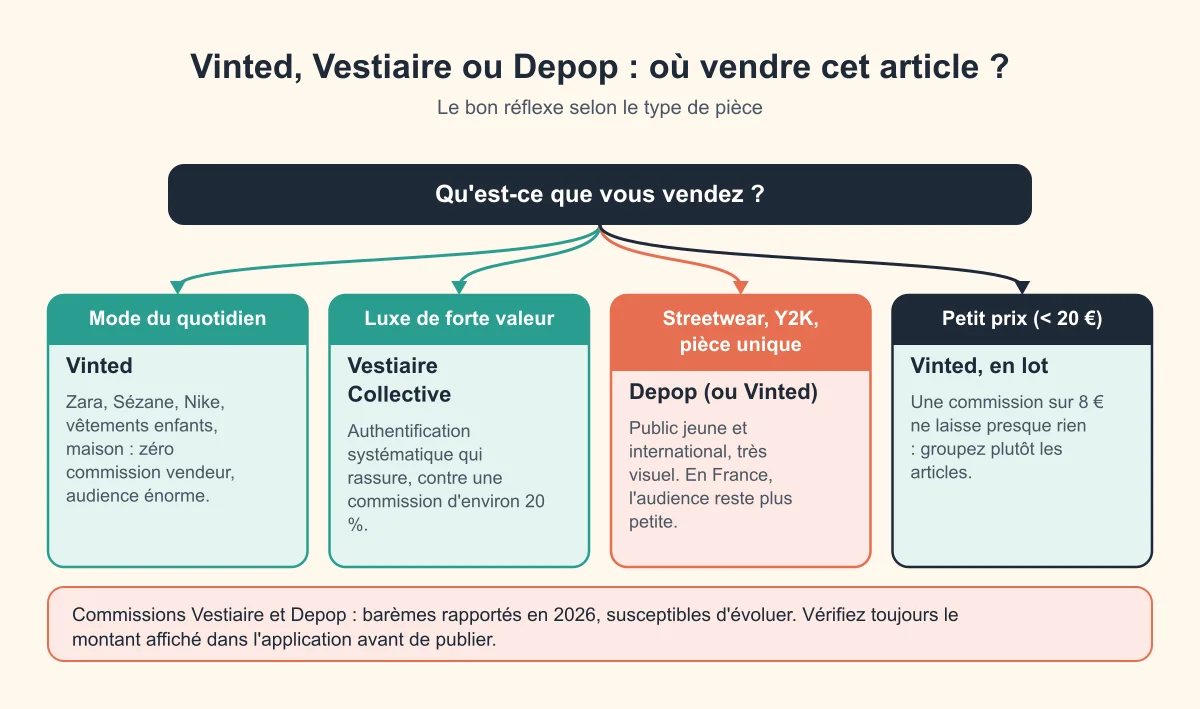
Pour la mode du quotidien, Vinted est le meilleur choix en France : aucune commission pour le vendeur particulier et une audience énorme. Pour un article de luxe de forte valeur, Vestiaire Collective rassure davantage grâce à son authentification systématique, mais garde environ 20 % du prix. Depop convient au streetwear, au Y2K et aux pièces uniques, avec un public plus international.
Le bon réflexe : choisir la plateforme article par article, pas une fois pour toutes. Voici le comparatif, le calcul de ce que vous touchez vraiment, et les cas où il vaut mieux changer de plateforme.
Le comparatif en un tableau
| Critère | Vinted | Vestiaire Collective | Depop |
|---|---|---|---|
| Positionnement | Mode du quotidien, enfants, maison, électronique | Luxe, créateurs, vintage rare | Streetwear, Y2K, vintage tendance |
| Audience | Très large en France et en Europe | Internationale, prête à payer le prix | Jeune, très forte au Royaume-Uni et aux États-Unis |
| Frais pour le vendeur particulier | Aucun : l’acheteur paie les frais Vinted et le port | Commission + frais de traitement (≈ 20 % du prix d’après le barème rapporté depuis juin 2026) | Commission ≈ 10 % + frais de paiement hors Royaume-Uni et États-Unis, selon les guides vendeurs |
| Authentification | Optionnelle, payée par l’acheteur (10 €) sur une sélection d’articles | Au cœur du modèle | Pas de contrôle systématique |
| Vitesse de vente | Rapide sur les marques courantes | Plus lente, ventes à forte valeur | Variable, dépend beaucoup du visuel |
Les barèmes de Vestiaire Collective et de Depop changent régulièrement et diffèrent selon les pays : vérifiez le montant affiché dans l’application au moment de publier. Les chiffres ci-dessus sont des ordres de grandeur, pas des tarifs garantis.
Combien vous touchez vraiment
Net vendeur = prix de vente − commission − frais de traitement − éventuels frais d’envoi à votre charge.
Simulation avec les ordres de grandeur ci-dessus (hors frais d’envoi) :
| Prix de vente | Vinted (particulier) | Vestiaire (≈ 20 %, forfait sous 75 €) | Depop (≈ 10 % + ≈ 3 %) |
|---|---|---|---|
| 30 € | 30 € | ≈ 15 € (forfait d’environ 15 € rapporté sous 75 €) | ≈ 26 € |
| 80 € | 80 € | ≈ 64 € | ≈ 70 € |
| 300 € | 300 € | ≈ 240 € | ≈ 261 € |
Sur un article courant, l’écart est énorme. Sur un sac de grande maison, l’équation change : l’authentification peut vous permettre de vendre plus cher et plus sereinement, ce qui compense la commission. Pour vos propres chiffres sur Vinted, utilisez le calculateur de bénéfices et le calculateur de frais Vinted (ce que paie l’acheteur).
Vinted : la mode du quotidien
À vendre ici : Zara, H&M, Mango, Sézane, Maje, Sandro, Ba&sh, Nike, Adidas, vêtements enfants, maison, livres, jeux, électronique.
- Pour : zéro commission vendeur, audience très large en France, publication en quelques minutes, Vinted Go pour expédier sans imprimante.
- Contre : forte concurrence sur les marques populaires, beaucoup de négociation, public moins enclin à payer le prix fort sur le luxe. Les notes et les reproches des utilisateurs sont détaillés dans nos avis Vinted.
- Bon à savoir : pour le luxe, Vinted propose la Vérification de l’article (10 € payés par l’acheteur) sur une sélection de pièces de créateurs, et Vinted Go indemnise jusqu’à 500 € un colis perdu. Voir vendre du luxe sur Vinted.
Pour bien fixer vos prix : fixer le bon prix sur Vinted.
Vestiaire Collective : le luxe authentifié
À vendre ici : grands sacs Hermès, Chanel, Louis Vuitton, Dior ; chaussures et prêt-à-porter de créateurs ; joaillerie ; vintage de maisons de luxe.
- Pour : acheteurs qualifiés, authentification qui justifie le prix, audience internationale.
- Contre : commission élevée, ventes plus lentes, modération exigeante, article refusé au contrôle renvoyé au vendeur.
- À éviter : les petits prix (le forfait mange tout), la mode rapide, les articles très abîmés.
Depop : streetwear, Y2K et pièces uniques
À vendre ici : Carhartt, Stüssy, Supreme, Levi’s vintage, Diesel années 2000, sneakers recherchées, pièces customisées ou faites main.
- Pour : public jeune et sensible au style, plateforme très visuelle, ouverture internationale.
- Contre : audience française plus limitée, effort de mise en scène important, frais et envois qui varient selon le pays.
- À éviter : mode basique, vêtements enfants, joaillerie de valeur.
Où vendre quoi : le récap
| Article | Premier choix | Alternative |
|---|---|---|
| Robe Zara, jean H&M | Vinted | — |
| Manteau Ba&sh, sac Sézane | Vinted | Vestiaire si prix élevé et état parfait |
| Vêtements enfants, maison, livres | Vinted | — |
| Classiques Louis Vuitton (Speedy, Neverfull) | Vinted avec preuves | Vestiaire |
| Grand sac Chanel ou Hermès | Vestiaire Collective | Vinted avec Vérification de l’article |
| Joaillerie de grandes maisons | Vestiaire Collective | — |
| Hoodie Carhartt, veste Levi’s vintage | Vinted ou Depop | — |
| Sneakers recherchées | Vinted ou Depop | — |
| Pièce unique customisée | Depop | Vinted |
Vendre sur plusieurs plateformes à la fois
C’est possible : publier le même article sur deux plateformes multiplie les chances, à condition de le retirer partout dès qu’une vente est conclue. Sinon, double vente, annulation, acheteur déçu et risque d’évaluation négative.
Ça vaut le coup si :
- l’article a une valeur suffisante pour justifier le temps passé ;
- vous traitez les ventes rapidement ;
- vous suivez votre stock dans un tableau (un simple tableur suffit).
Pour un dressing de vêtements du quotidien, le gain est rarement à la hauteur de l’effort : concentrez-vous sur une bonne annonce Vinted.
Et Leboncoin, eBay, Etsy ?
- Leboncoin : énorme audience en France pour les meubles, l’électroménager, les objets volumineux et la remise en main propre.
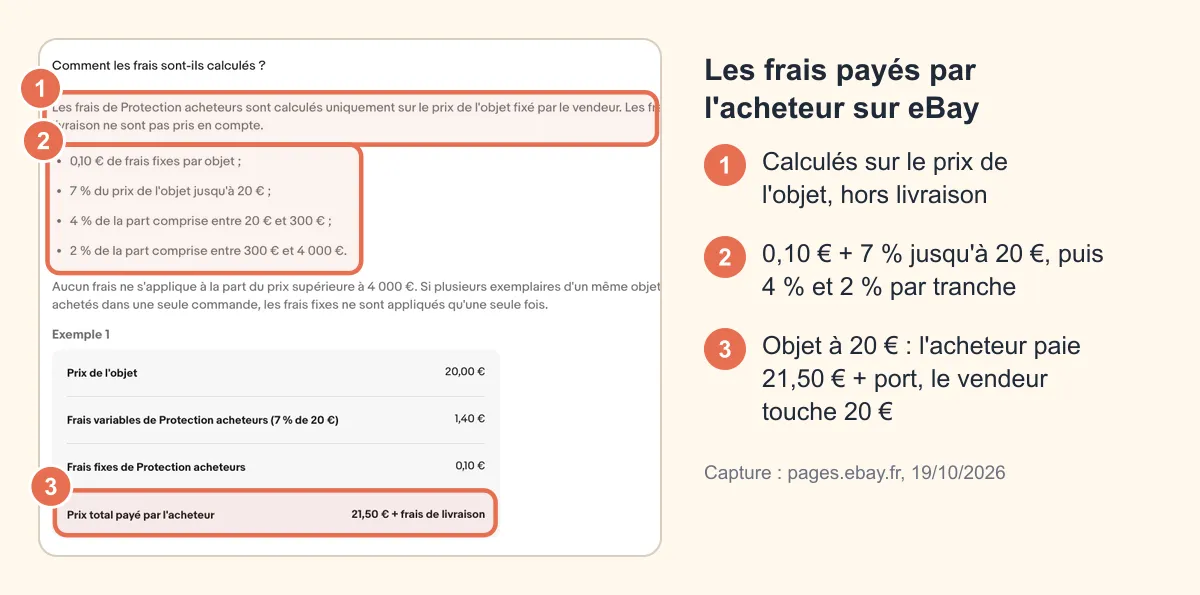
- eBay : objets de collection, vinyles, jouets anciens, acheteurs internationaux. Depuis le 1er septembre 2026, la vente y est gratuite pour les particuliers : voir nos avis sur eBay.
- Etsy : fait main et vintage, avec un public qui cherche l’original.
Aucune ne concurrence Vinted sur la mode du quotidien en France.
Questions fréquentes
Vinted ou Vestiaire Collective pour vendre un sac de luxe ?
Pour un grand sac de forte valeur, Vestiaire Collective rassure davantage grâce à l’authentification systématique, au prix d’une commission d’environ 20 %. Sur Vinted, vous ne payez rien et l’acheteur peut ajouter la Vérification de l’article ; avec de bonnes preuves, c’est une vraie option.
Vinted prend-il une commission au vendeur ?
Non, pas au vendeur particulier : l’acheteur paie les frais Vinted et le port. Les seules dépenses optionnelles côté vendeur sont les options de visibilité comme le Boost, à évaluer avec le calculateur de boost Vinted.
Depop marche-t-il en France ?
Oui, mais son audience y est plus réduite qu’au Royaume-Uni ou aux États-Unis. Il fonctionne surtout pour le streetwear, le Y2K et les pièces uniques, et devient intéressant si vous acceptez d’expédier à l’international. Notes, reproches fréquents et frais exacts pour un vendeur en France : voir nos avis sur Depop.
Quelle plateforme vend le plus vite ?
Pour la mode milieu de gamme, Vinted, grâce à son audience. Pour le luxe, les ventes prennent plus de temps partout, mais Vestiaire Collective attire les acheteurs prêts à payer le prix.
Faut-il un compte Pro pour vendre sur plusieurs plateformes ?
Non, tant que vous videz votre propre dressing. Si vous achetez pour revendre régulièrement, c’est une activité professionnelle, quelle que soit la plateforme : voir Vinted Pro ou particulier.